





Zhuokeji was once home to Barkam's ruling chieftains and still commands global understanding of Gyalrong culture's evolution, Erik Nilsson reports.

For centuries, Zhuokeji Tusi Manor commanded lands in Barkam. Today, it reigns over a tract of global imagination.
The former residence of the Gyalrong Tibetan chieftains, built in 1266 and last renovated in 1938, in Sichuan province's Aba prefecture, houses true history and inspires historical fiction.
Within these walls, local luminary Alai discovered the inspiration for the setting of his seminal 1998 novel, Red Poppies — which won China's top literary honor, the Mao Dun Prize — and eponymous screen and stage adaptations, including a TV series filmed on-site. These have spread Zhuokeji's legacy and inspired descriptions translated into a dozen tongues relished by people around the globe. As such, Zhuokeji has become a place of pilgrimage for a select literary fan base.
Pulitzer Prize-winning writer Harrison Salisbury described this manor as a "pearl on the snow-covered plateau".
It bejewels the crown of a rocky summit overlooking the lands its masters once controlled.
The manor's very name, Zhuokeji, translates as "supremacy" — a fitting title for a structure that encapsulates the enduring yet evolving story of Gyalrong culture. For centuries, it and manors like it have defined the region's skylines and social landscapes.
These paramount buildings served as the foundations for the architecture of the tusi chieftain system, brick-and-board hearts that pumped power through the political, economic and military veins of their domains.
These feudal rulers governed their localities absolutely, yet paid taxes and tributes to the distant central government. The fact that their positions were hereditary is the crux of Red Poppies, which is narrated from the perspective of a chieftain's "idiot" son amid the upheavals of the early 20th century.
Zhuokeji played a pivotal role in national destiny as a significant stopover for the Red Army during the Long March (1934-36). The Communist Party of China's leaders, including Mao Zedong, Zhou Enlai and Zhu De, stayed there and held a critical conference to literally and metaphorically chart the course for the Party and country. Their quarters and meeting venue are still largely furnished as they were during their stay.
The 1935 Zhuokeji Conference marked a seismic shift toward the end of the feudalism that had dictated local life, and many of Aba's residents soon joined the Red Army as it continued onward toward Yan'an, Shaanxi province.
Generally speaking, Zhuokeji's physical structure testifies to the strict social configuration it once enforced.
Servants slept, ate and did dirty work on the ground floor, while chieftains, monks and nobility pursued lofty spiritual purity on the fifth floor.
Visitors can explore this architectural testimony to past societal hierarchies while discovering the culturally unique purposes of each of the compound's 63 rooms.
Barley liquor, yak-leather and medicinal herbs were processed and stored on the lowest level. A whole room was dedicated to warehousing tea, since Barkam was a major — although not central — node of the Tea Horse Road trade network. Specialized servants were tasked solely with spinning and weaving the soft, warm and durable pulu wool beloved by the region's nobility.
Items like robes, crossbows and sedans displayed on this floor show the ways nobility dressed, hunted and traveled.
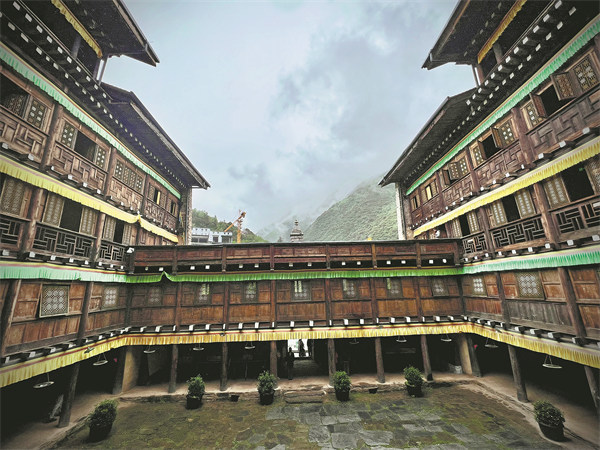
Zhuokeji Manor — a former seat of tusi chieftains' power — in Barkam county in Sichuan province's Aba prefecture serves as the real-life inspiration for the fictional setting of Alai's celebrated novel, Red Poppies. [Photo by Erik Nilsson/China Daily]
Rooms on the lowest level also reveal how servants slept, ate and labored — and even how they sang, since songs were a feature of farmwork, with specific refrains guiding each task from planting to harvest. These melodies were intended to lift spirits while the rhythms synchronized the tempo of their movements as they toiled in the fields.
Since the staircases functioned as ladders of power, the second story served fundamental administrative functions. It contained the chieftain's reception hall, religious translation office and the main meeting room.
Ordinary servants were forbidden from ascending to the third floor, where the chieftain engaged in daily life and enjoyed leisure. It hosted an opulent banquet hall, a study and an opium room — Red Poppies' title nods to the narcotic's local production. In the Lawsuit Hall, chieftains prioritized mediation over adjudication when handling disputes among subjects.
The chieftain's wives' suite contained a drawing room for meeting top officials from other territories, a "secret conversation room", where the ruler and his spouse could discuss confidential matters, and the leading lady's bedroom.
Higher-ranking officials permitted on the third story included the estate managers, who acted as heads of staff to oversee a system of stewards sometimes likened to a "cabinet" for the manor. A mini bureaucracy of designated officeholders assumed responsibility for overseeing construction, catering and management at Zhuokeji.
The fourth floor has been converted into a showroom of Gyalrong culture, featuring displays that present traditional operas, medicine and attire.
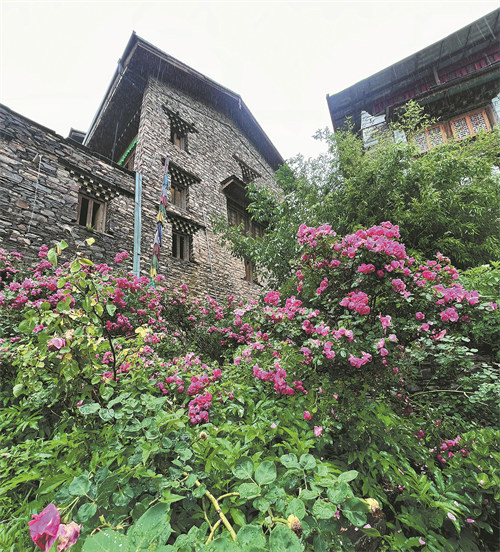
Zhuokeji Manor — a former seat of tusi chieftains' power — in Barkam county in Sichuan province's Aba prefecture serves as the real-life inspiration for the fictional setting of Alai's celebrated novel, Red Poppies. [Photo by Erik Nilsson/China Daily]
The ascent to the fifth floor culminates in a sacred apex — the ruling family's private monastery, which housed temples and monks from various Buddhist sects. The chieftains worshiped in ways that demonstrated impartiality toward the major denominations that flourished in the region. Temples on this floor accommodated the "red "Nyingma, or "old tantra", sect and the "yellow" offshoot, whose emphases on sutra, tantra and teaching endowed it with the name Gelug, meaning "good rules".
A skull symbolizing subjugation hangs above the entry to the Simhamukha Dakini Temple that venerates a Vajrayana yidam (meditative deity) believed to escort to paradise those who faithfully subject themselves to Buddha.
Three divinities who invoke long life — Amitayus, White Tara and the Mother of Victory — and a "yellow "wealth god emerge from the mural adorning the wall of the Longevity Palace, where the ruling families' monks recited sutras to pray for long and prosperous lives.
The nearby Mandala Temple venerates the sacred shape that symbolizes the celestial palaces of yidam. They're rendered as paintings, sand art and sculptures, including specimens carved in wood and stone and inlaid with precious metals and gems. The chieftains vacated Zhuokeji long ago, but the manor is still inhabited by their legacy. This abode of bygone rulers still stands as a citadel of memory.
Today, it reigns not over regional territory but rather the world of story. And that story is continuing to unfold from inside its gates to far beyond its walls and the borders of Barkam to captivate the wider world.

Zhuokeji hosts temples belonging to various Buddhist sects, reflecting chieftains' strategic portrayals of denominational impartiality. [Photo by Erik Nilsson/China Daily]
【未經(jīng)授權(quán),嚴(yán)禁轉(zhuǎn)載!聯(lián)系電話028-86968276】